
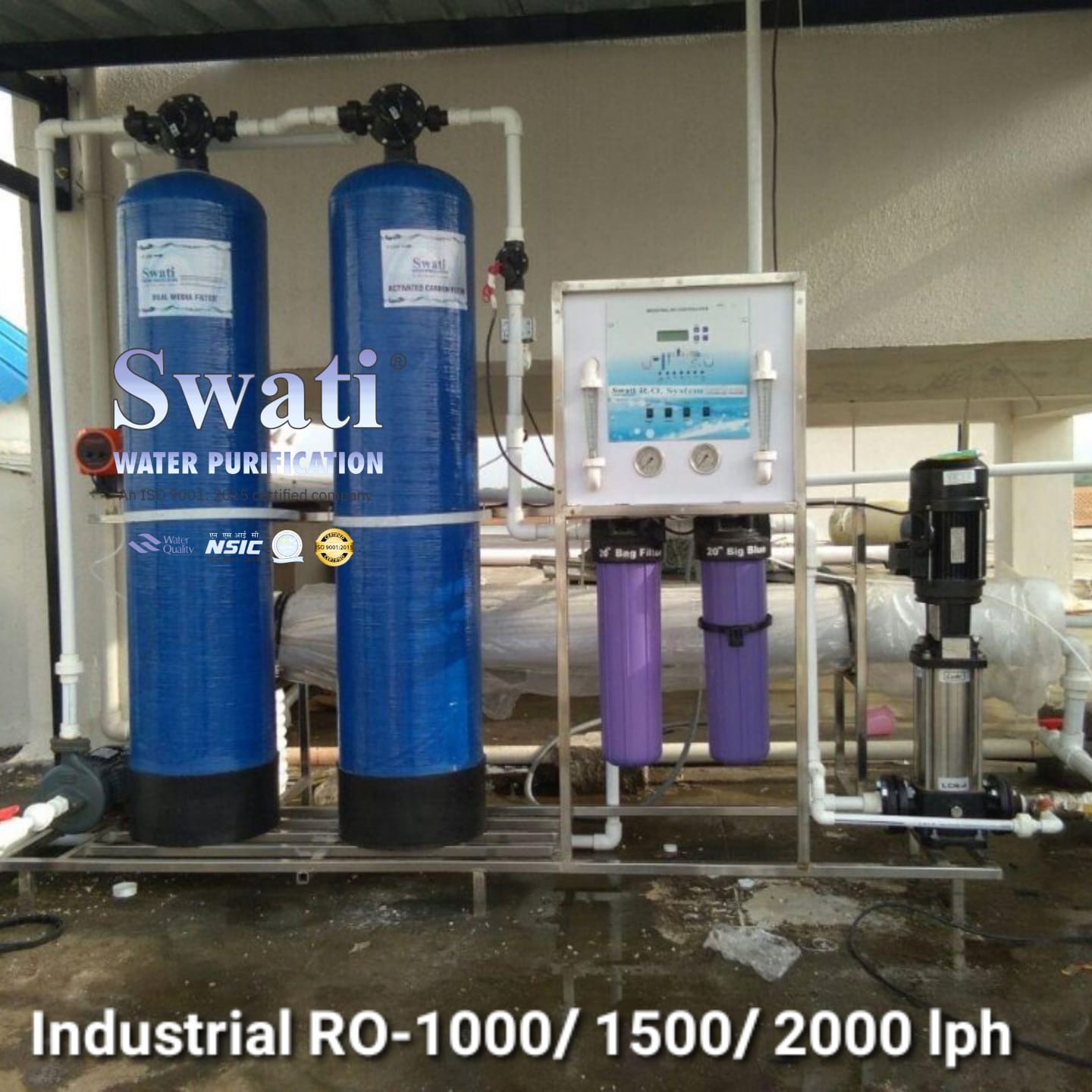
Comprehensive Guide: Choosing a 2000 LPH Industrial RO Plant Manufacturer in Gujarat
Water is the operational backbone of modern industrial manufacturing, pharmaceutical processing, commercial real estate, and large-scale infrastructure. As industrial clusters expand across Gujarat and India’s primary economic corridors, securing a continuous supply of treated, high-purity process water has become a major requirement for maintaining operational continuity, product standards, and compliance.
Raw water sourced from borewells, surface bodies, GIDC estates, and municipal pipelines often contains elevated levels of Total Dissolved Solids (TDS), silica, heavy metals, chlorides, and mineral hardness. When fed directly into industrial boilers, heat exchangers, cooling towers, or sensitive processing equipment, these impurities cause severe mineral scaling, pipe encrustation, chemical instability, and costly downtime.
This guide covers the technical architecture, operating principles, application domains, and key benefits of a 2000 LPH Industrial Reverse Osmosis (RO) Plant, highlighting why Swati Water Purification is a preferred manufacturer and engineering partner in Gujarat and across India.
What is a 2000 LPH Industrial RO Plant?
A 2000 LPH (Liters Per Hour) Industrial RO Plant—also classified as a 2.0 KLPH water treatment unit—is a medium-to-large capacity commercial water purification system engineered to yield 2,000 liters of purified water every hour. When operated continuously across standard industrial shifts, it generates 16,000 to 32,000+ liters of high-purity water daily.
Using advanced Reverse Osmosis (RO) membrane separation, the system forces pressurized feed water through semi-permeable, cross-linked Thin-Film Composite (TFC) membranes. This process removes 95% to 98% of dissolved inorganic salts, heavy metals, pyrogens, and micro-particulate matter, yielding water suitable for critical processing and boiler feed operations.
Industrial & Commercial Applications
The 2000 LPH capacity is a common baseline for medium-to-large processing units, large commercial establishments, and central utility setups.
1. Textile Processing, Dyeing & Finishing Mills
Textile printing, dyeing, and fabric-washing operations require soft water free of iron, manganese, and hardness salts to ensure uniform dye uptake, prevent fabric yellowing, and eliminate chemical interference. A 2000 LPH plant provides a reliable supply of low-TDS water to keep dyeing lines consistent.
2. Pharmaceuticals, Biotechnology & Healthcare Facilities
Pharmaceutical processing, bulk drug synthesis, cosmetic formulation, hemodialysis units, and central hospital sterilizers require water that complies with stringent pharmacopoeial purity profiles. A 2000 LPH system provides pure water for multi-stage washing, reagent preparation, and pure steam generation.
3. Food, Dairy & Beverage Production
Commercial dairies, beverage bottling lines, packaged drinking water operations, and industrial bakeries use 2000 LPH RO plants as an ingredient water source. Removing minerals and organic contaminants helps maintain consistent product taste, color, and shelf-life while meeting food safety standards.
4. Boiler Feed & HVAC Cooling Towers
High-pressure steam boilers, heat exchangers, and central HVAC chillers require low-TDS, scale-free water. Feeding a 2000 LPH RO system's permeate water into boiler feed circuits prevents scale buildup on heating surfaces, improves heat transfer efficiency, and cuts fuel consumption.
5. Large Commercial Real Estate, IT Parks & Institutions
Shopping malls, multi-story office complexes, educational institutions, university campuses, and residential townships install 2000 LPH RO plants for central drinking water supply, utility washing, and protecting internal plumbing networks.
Major Benefits of Installing a 2000 LPH Industrial RO Plant
Investing in an industrial RO system engineered by Swati Water Purification provides several long-term operational and economic benefits:
High-Volume Continuous Yield: Generates a consistent supply of purified water to meet heavy process demands without causing facility downtime.
Protects Plant Capital Assets: Stripping scale-forming calcium, magnesium, and silica ions prevents internal pipe encrustation, protecting pumps, heat exchangers, valves, and boilers.
Optimized Power Consumption: Built with vertical multistage pumps paired with low-energy TFC membranes to deliver high permeate recovery rates with lower energy consumption per kiloliter.
Automated Process Protection: Integrated low and high-pressure cut-off switches, automatic flush sequences, and online TDS sensors guard pumps against cavitation, dry running, and membrane fouling.
Regulatory & Quality Compliance: Helps facilities comply with state pollution control board norms, municipal water quality standards, and ISO quality management guidelines.
Pan-India Network: Serving Gujarat & Major Metropolitan Centers
Swati Water Purification specializes in designing, manufacturing, installing, and maintaining industrial reverse osmosis systems across Gujarat's GIDC industrial zones and primary economic hubs nationwide:
Our installation, commissioning, and technical support services cover:
Gujarat Industrial Hubs: Ahmedabad, Gandhinagar, Surat, Vadodara, Rajkot, Ankleshwar, Vapi, Jamnagar, Bhavnagar, and Kalol.
Maharashtra Region: Mumbai, Pune, Nashik, Thane, Navi Mumbai, Nagpur, and Chhatrapati Sambhajinagar.
Central & Northern India: Bhopal, Indore, Jaipur, Udaipur, Kanpur, Lucknow, Noida, and Gurugram.
Our engineering team manages feed water testing, custom skid layout design, logistics, site assembly, and long-term maintenance support across all regions.
Frequently Asked Questions (FAQs)
Q1. What is the price of a 2000 LPH Industrial RO Plant in Gujarat?
Prices typically range depending on component specifications (e.g., SS-304 vs. MS skid frames, FRP vs. SS pressure vessels, PLC vs. semi-automatic panels, and pump brand selections).
Q2. How much power does a 2000 LPH RO plant consume?
A standard 2000 LPH system uses approximately 6.0 kW to 9.5 kW per hour of electricity (operating on 3-phase 415V power), driven mainly by the high-pressure vertical multistage pump and raw water feed pump.
Q3. How long do 8040 RO membranes last in this system?
With proper pre-treatment backwashing, timely cartridge replacements, and correct antiscalant dosing, high-quality 8040 RO membranes typically last 2 to 3 years.
Q4. Can a 2000 LPH RO plant reduce water TDS from 4,000 PPM to under 150 PPM?
Yes. High-rejection TFC membranes achieve 95% to 98% salt rejection, lowering a 4,000 PPM raw water feed down to 80–180 PPM, making it ideal for industrial processing and drinking uses.
Q5. What is the reject water percentage, and can it be reused?
Standard 2000 LPH RO plants maintain a 50% to 60% recovery rate, generating 2,000 LPH of pure water and roughly 1,300–2,000 LPH of concentrated reject brine. This reject water can be repurposed for floor washing, toilet flushing, landscaping, or cooling tower make-up feed.
Contact Us: +91 98251 83643 | +91 70439 99563
E-Mail : info@swatiwater.com | sales@swatiwater.com