
Advanced Industrial & Commercial Water Treatment: The Complete Guide to FRP RO Plants
Water quality dictates operational excellence across modern commercial and industrial sectors. When raw water sources carry high mineral content, scaling agents, and chemical pollutants, everyday machinery breaks down, product standards drop, and operating expenses skyrocket. To counter these challenges, enterprises increasingly rely on FRP RO Plants as a resilient, long-term cornerstone of their utility infrastructure.
At Swati Water Purification, we design, supply, and install advanced water treatment systems engineered for high performance, structural longevity, and seamless integration into diverse commercial ecosystems.
What Defines an FRP RO Plant?
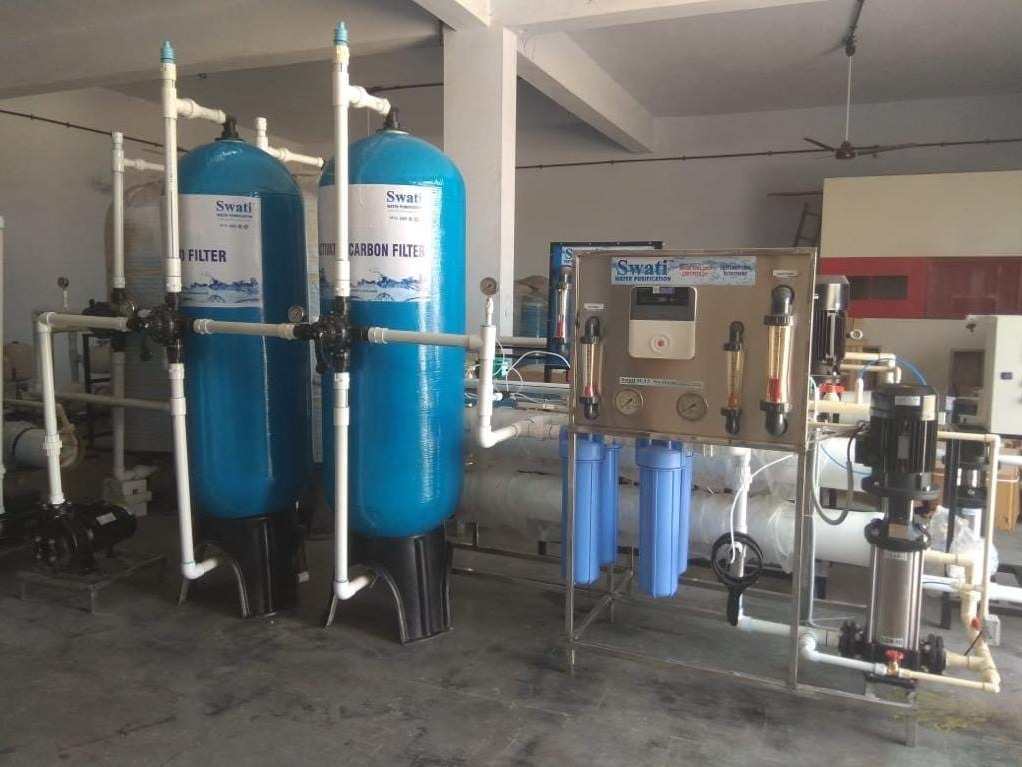
An FRP RO Plant is a water purification system built around pressure vessels manufactured from Fiberglass Reinforced Plastic (FRP). Unlike traditional steel containers that degrade under constant wet-dry cycles and chemical exposure, FRP combines a structural polymer matrix with high-strength glass filaments.
When paired with high-rejection Reverse Osmosis membranes, these plants force feed-water through microscopic pores at high pressures, successfully filtering out dissolved solids, heavy metals, minerals, and organic contaminants. The result is a consistent stream of purified water that satisfies both industrial output standards and health safety mandates.
Operational Advantages and Core Benefits
Integrating an industrial-grade FRP RO system into your facility brings measurable, long-lasting advantages:
Total Immunity to Corrosion: FRP materials do not rust, oxidize, or degrade when exposed to harsh treatment chemicals or saline water, safeguarding system integrity.
Optimal Strength-to-Weight Ratio: Fiberglass vessels are remarkably lightweight yet structurally rigid, reducing the need for heavy foundation work during plant placement.
Superior Contaminant Rejection: Modern plants achieve high reduction rates for Total Dissolved Solids (TDS), hardness-causing calcium and magnesium ions, chlorides, and toxic heavy metals.
Reduced Scaling and Maintenance: The smooth inner linings of FRP pressure vessels discourage biological growth and mineral scaling, lowering downtime and cleaning frequency.
Energy Optimization: Advanced high-pressure pumps and fine-tuned recovery loops minimize energy overheads while maximizing water output.
Comprehensive FRP RO Plant Capacity Options
To accommodate global engineering standards and local plant requirements, our robust systems are available across three standard measurement metrics: Liters Per Hour (LPH), Cubic Meters Per Hour (M3/Hr), and Kilo Liters Per Hour (KLPH).
1. Capacity Range in Liter Per Hour (LPH)
Whether you need a compact system for a small facility or a heavy-duty setup for massive municipal output, our LPH range covers:
250 LPH | 500 LPH | 1000 LPH | 1500 LPH | 2000 LPH | 2500 LPH | 3000 LPH | 4000 LPH | 5000 LPH | 6000 LPH | 8000 LPH | 10000 LPH | 12000 LPH | 15000 LPH | 20000 LPH | 25000 LPH | 30000 LPH | 50000 LPH | 60000 LPH (and custom higher capacities upon request).
2. Capacity Range in Meter Cube Per Hour (M3/Hr)
For engineering specifications calculated in metric flow rates, choose from our reliable range:
1 M3/Hr | 1.5 M3/Hr | 2 M3/Hr | 2.5 M3/Hr | 3 M3/Hr | 4 M3/Hr | 5 M3/Hr | 6 M3/Hr | 8 M3/Hr | 10 M3/Hr | 12 M3/Hr | 15 M3/Hr | 20 M3/Hr | 25 M3/Hr | 30 M3/Hr | 50 M3/Hr | 60 M3/Hr
3. Capacity Range in Kilo Liter Per Hour (KLPH)
Seamlessly align with large-scale industrial project reports using our precise KLPH capacity tiers:
0.25 KLPH | 0.5 KLPH | 1 KLPH | 2 KLPH | 2.5 KLPH | 3 KLPH | 4 KLPH | 5 KLPH | 6 KLPH | 8 KLPH | 10 KLPH | 12 KLPH | 15 KLPH | 20 KLPH | 25 KLPH | 30 KLPH | 50 KLPH | 60 KLPH
Key Applications Across Commercial and Industrial Sectors
From hospitality venues to massive manufacturing facilities, tailored FRP RO solutions support critical processes across multiple industries:
Manufacturing & Engineering: Supplying compliant boiler feed water and cooling tower make-up water to prevent scale accumulation and thermal efficiency loss.
Hotels, Resorts & Hospitality: Delivering odorless, softened, and safe water for guest rooms, commercial kitchens, laundry services, and swimming pools.
Hospitals & Pharmaceutical Units: Generating high-purity water required for equipment sterilization, laboratory analysis, and sensitive medical procedures.
Food & Beverage Processing: Ensuring water inputs meet stringent regulatory hygiene criteria for product formulation, bottle rinsing, and cleaning-in-place (CIP) loops.
Commercial Real Estate & IT Parks: Supporting high-volume domestic water demands across multi-story corporate complexes and residential housing societies.
Regional Footprint: Serving Major Metropolitan Areas
At Swati Water Purification, we manage complete project lifecycles—from initial water quality testing and system fabrication to on-site assembly, testing, and handover. We serve industrial corridors and metropolitan centers nationwide, ensuring localized technical support for businesses located in:
Western Region: Ahmedabad, Gandhinagar, Surat, Vadodara, Mumbai, Pune, and Nashik.
Central & Northern Hubs: Bhopal, Indore, Jaipur, Kanpur, and surrounding manufacturing zones.
Our engineering teams evaluate local raw water profiles—whether sourced from deep borewells, tankers, or municipal lines—to configure the exact capacity (measured in LPH) required for your facility.
Frequently Asked Questions (FAQs)
Q1: What is the typical operational lifespan of an FRP vessel?
A: With routine servicing and proper pre-treatment maintenance, an FRP pressure vessel easily functions for 8 to 12 years or longer, as the composite material does not suffer from rust or structural pitting.
Q2: Why choose FRP over traditional Metal or Stainless Steel systems?
A: Metal systems require expensive anti-corrosive coatings and are prone to weld-point degradation when handling brackish or chemically treated water. FRP is naturally inert, chemically resistant, lighter, and more economical for high-salinity applications.
Q3: How is the correct plant capacity determined for my business?
A: Capacity sizing depends on your peak operational hours, total daily consumption volume, and the input water’s TDS score. Our technical specialists analyze your specific water reports to recommend the ideal flow rate configuration.
Optimize your enterprise's water management strategy with Swati Water Purification. Contact our team today to schedule an expert water audit and explore custom FRP RO configurations built for your business.
Contact Us: +91 98251 83643 | +91 70439 99563
E-Mail : info@swatiwater.com | sales@swatiwater.com