


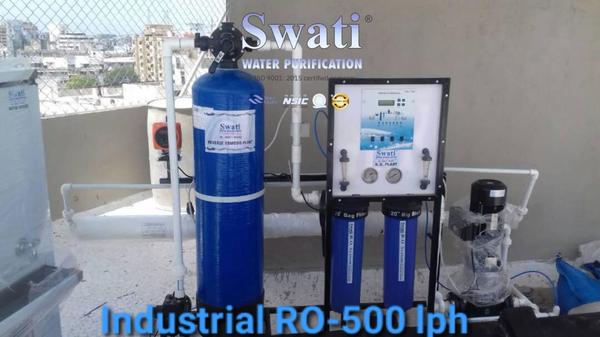
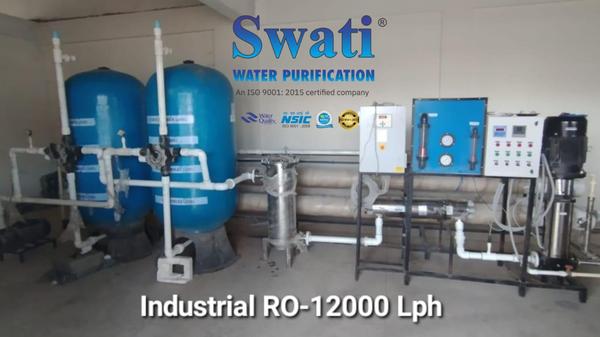
An FRP RO Plant is a reverse osmosis system where the primary structural components—specifically the media filter tanks and membrane housings—are made of Fiberglass Reinforced Plastic (FRP). Key Components of an FRP RO Plant FRP Pre-treatment Vessels: Tall tanks filled with sand, gravel, or activated carbon to remove large sediments and chlorine. FRP Membrane Housings: The horizontal “pressure vessels” that hold the RO membranes. High-Pressure Pump: Typically vertical multi-stage pumps (often stainless steel) to push water through the membranes. Control Panel: Usually equipped with a PLC/HMI to monitor flow rates, TDS levels, and pressure. Dosing Systems: Pumps that inject anti-scalants to prevent mineral buildup on the membranes. FRP plants are typically measured in LPH (Liters Per Hour). Common sizes include: 250–500 LPH: Small offices, schools, hotels and restaurants. 1,000–5,000 LPH: Small factories, textile units, and Medium-scale Industries. 10,000 LPH-60,000 LPH: Large-scale industrial processes and power plants.
Address
526/1, Bhagyalaxmi Industrial Estate, Bhadaj to Rakanpur Road, Near Ahmedabad, Ta-Kalol, Dist-Gandhinagar-382721
Ahmedabad, India, 382721